


Telecommunications for the smart grid
Telecommunications trends and applications in the smart grid
Electrical network Cybersecurity Operating plants
After their spectacular evolution in recent decades, telecommunications have become an essential and indispensable component for the proper operation of the electricity grid. Discover our progress in this field as pioneers in the deployment of telecommunications services for the electricity network.

Electricity distribution networks are undergoing the greatest transformation in their history. The accelerating electrification of the economy, the widespread integration of renewable energy sources, the growth of self-consumption and the expansion of electric vehicles demand much more dynamic, real-time system management. In this new context, telecommunications have evolved from a mere operational support function into a turning point: the true nervous system that ensures climate prosperity, security of supply and the cybersecurity of smart grids.
Historically, the need for communications in the electricity sector began with operational voice communications, a dedicated channel that enabled direct contact between field technicians and control centres, ensuring safety during complex switching operations. In the mid-20th century, the progressive automation of the system introduced the first digital protection systems and remote-control units. These devices required highly reliable communication links to monitor the status of facilities and execute switching commands remotely.
Today, given the complexity of a decarbonised and decentralised electricity system, telecommunications have become a key pillar of smart grid development, essential for anticipating incidents, automating operations and protecting the company's assets.
Key areas of telecommunications development in smart grids
Today, telecommunications are essential to ensuring the efficient, safe and reliable operation of the electricity network. As a pioneer in deploying telecommunications services for the network, Iberdrola continues to lead development across all the areas required. This development is structured around four key areas:
-

Network digitalisation and automation
Advanced information technologies enable us to move from traditional operations towards an automated, real-time model. This transformation optimises monitoring, speeds up incident resolution and improves process efficiency.
-

Secure and resilient connectivity
We remain committed to deploying and operating our own telecommunications networks, specifically designed to meet the electricity system's innovation requirements. These networks ensure a reliable and robust supply in the face of climatic or technical disruptions, while optimising operating costs.
-

Integration of renewables, self-consumption and new electricity uses
The growth of clean generation, distributed energy resources, self-consumption and electric vehicle adoption requires bidirectional energy flow management. Telecommunications provide the visibility and control needed to balance supply and demand at every point in the network.
-

Cybersecurity and intelligent data management
We turn the vast amounts of information generated by the network into actionable insights through data analytics, always adhering to the highest cybersecurity standards. Protecting privacy, ensuring communications integrity and defending critical infrastructure are priorities in our management model.


Secure communications for a more resilient network
The digitalisation of the electricity system requires telecommunications infrastructure to be transformed into highly secure networks designed to maintain service continuity and mitigate risks in environments classified as critical infrastructure. Organisations such as the National Institute of Standards and Technology (NIST) highlight that smart grids depend on secure bidirectional communications technologies to strengthen monitoring, incident management and security of electricity supply.
The shift towards more digitalised energy systems increases the need for communications architectures that protect both data and operational processes. Recent studies on smart grid cybersecurity, such as Smart grid cyber-physical systems: Components, vulnerabilities, mitigations, opportunities, and conceptual framework, and organisations such as the European Commission highlight the importance of incorporating authentication mechanisms, communications protection and advanced threat detection and mitigation capabilities to maintain service continuity and strengthen electricity network resilience.


Types of telecommunications applications in the electricity grid
This evolution in telecommunications is transforming the way the electricity grid is being developed and operated, in pursuit of greater efficiency. This can be mainly found in the following three areas:
-

Grid monitoring and operation
Telecommunications make it possible to monitor and operate the electricity grid in real time, reducing the number and duration of service interruptions as well as operating costs, to the direct benefit of customers.
-

Integration of new renewable generation technologies
These technologies enable the distribution of clean energy, which is essential in the fight against climate change and would not be possible without today's telecommunications technologies.
-

Development of smart grids
The introduction of new services, such as those offered by smart grids, opens up a range of possibilities for customers to gain effective control over their consumption and the ability to generate their own clean energy through self-consumption.


Iberdrola at the forefront of smart grid telecommunications
Iberdrola's leadership in telecommunications for electricity networks has enabled us to progress towards a more connected and automated smart network, better equipped to meet the energy system's changing needs. This involves combining high-capacity communications technologies with advanced digital solutions to collect and analyse information in real time, optimise asset operations and improve network efficiency and resilience. Examples of the cutting-edge technologies we use include:
- Optical fibre transmission using DWDM (Dense Wavelength Division Multiplexing): this technology makes it possible to transmit up to 100 times more information through a single optical fibre by using “light in different colours”. Each “colour” carries the same amount of information as a single conventional fibre.
- High-capacity IP/MPLS (Internet Protocol / Multiprotocol Label Switching) digital networks: enabling the transfer of large volumes of information, using the same technology that underpins today’s internet backbone.
-
4G and 5G networks, using both commercial operators' infrastructure and our own networks.
- PLC (Power Line Communications): telecommunications over power lines. We are leading the development of the PRIME (PoweRline Intelligent Metering Evolution) standard, which enables large-scale telecommunications to support the millions of smart meters installed to serve our customers, without the need for additional infrastructure beyond the power cables. We also have tens of thousands of devices deployed with broadband PLC (BPL) technology, which allows network assets to communicate through medium-voltage underground cables. This technology also improves the operation of the low-voltage grid.
- Software Defined Networks (SDN): we are leading the implementation of this technology in operational environments to enhance the resilience of automation and control of our electricity grid.
-
Industrial IoT and edge computing: connected sensors and devices enable real-time monitoring of the condition of electricity assets. By processing data close to where it is generated, edge computing helps reduce response times and improve operational decision-making.
-
Artificial intelligence and advanced substation automation: these solutions analyse large volumes of data from the network to anticipate potential incidents, optimise predictive maintenance and support more efficient, secure and automated electricity infrastructure operations.
Innovative telecommunications serving Iberdrola’s electricity grid
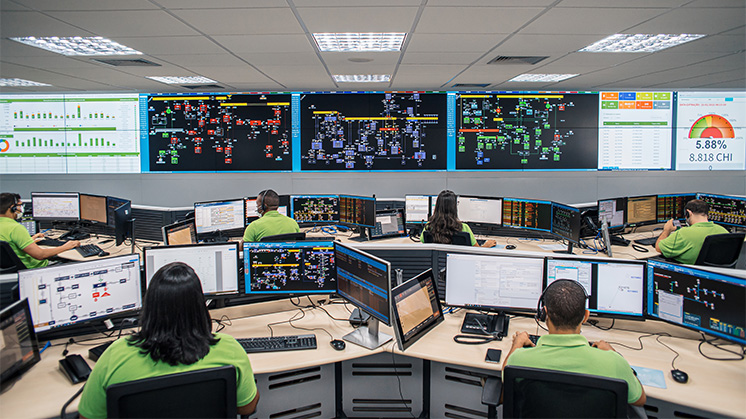
At Iberdrola we continue to make progress in telecommunications, leading multiple innovation projects in all the countries where we operate to develop technologies tailored to the needs of an electricity distribution company. These technologies enable, among other things, greater automation and control of the grid, advanced smart metering functions, communication and information support for field crews and improved communication with customers.
These digital capabilities deliver direct benefits to customers by contributing to a more reliable, efficient electricity network that is better adapted to changing energy needs. Advanced monitoring and automation help reduce the impact of potential incidents and speed up service restoration, while improved data management capabilities facilitate the integration of renewable energy, promote new self-consumption solutions and support the development of electric mobility. In addition, smart metering technologies provide users with more detailed information about their energy consumption, helping them make more efficient decisions and play an active role in consolidating a cleaner and more sustainable energy model.
The development of smart grids has required electricity companies to deploy extensive telecommunications networks. These networks have evolved from serving a few thousand locations to supporting millions of connection points and services that go far beyond traditional applications. This has presented a major challenge, which Iberdrola has addressed through innovative solutions.
Iberdrola has been a pioneer in this field and will continue to innovate through the development of projects to improve the performance of its telecommunications networks. This has established the Group as a global benchmark in the sector, always with the aim of improving the service we provide to our customers.